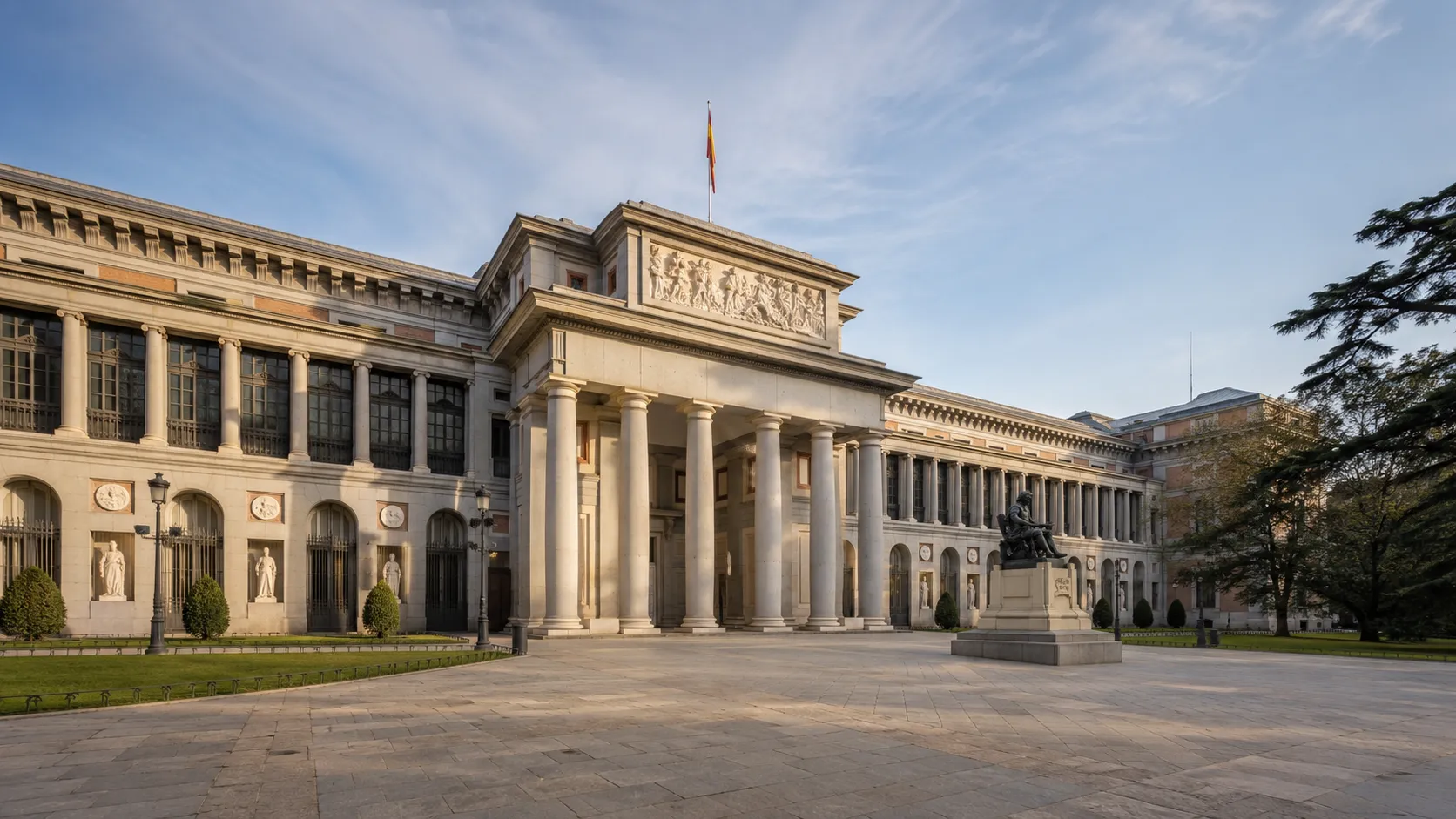
The building that houses the Prado today was not designed as a museum. In 1785 Charles III commissioned Juan de Villanueva to build a Royal Cabinet of Natural History, and only after the Peninsular War, with the building half in ruins, was it decided to use it to display the royal collections. It opened to the public in November 1819 with 311 paintings.
That origin explains what sets the Prado apart from any other great museum: it is not an encyclopaedic collection built through purchases, but the personal taste of the kings of Spain gathered over three centuries. That is why it holds the world's finest collection of Velázquez, Goya and El Greco, and a representation of Titian and Rubens found nowhere else.
The visit is organised around the Central Gallery, the lengthwise axis of the Villanueva building. On either side open the rooms of the Spanish, Italian and Flemish schools. The ground floor holds classical sculpture and the early panel paintings; the first floor, the core of the collection: Las Meninas, The Three Graces, The Nobleman with his Hand on his Chest, The Third of May.
Goya's Black Paintings have a room of their own and deserve time apart: fourteen works the painter made for himself on the walls of his house, transferred to canvas decades later. Bosch's The Garden of Earthly Delights is the other must-see, and it tends to draw a crowd at any hour.
In 2007 the museum was expanded with Rafael Moneo's building, which incorporated the cloister of Los Jerónimos and freed up space for temporary exhibitions. Today the collection exceeds 8,000 paintings, of which around 1,700 are on display: seeing it all in one go is neither possible nor advisable.
What not to miss at the Prado
The museum is huge. These three stops give shape to your visit if you are short on time.
Frequently asked questions
They all include access to the permanent collection with a reserved time slot plus an additional service: audio guide, guided tour or a second combined visit. Each listing sets out exactly what is and isn't included.
Yes. Admission is by time slot. When you choose the date you'll see the times available that day and can select the one you prefer.
You'll receive confirmation by email once payment is complete. That email shows your booking details, along with the ticket or the steps to download it if it isn't available yet. You can show it on your phone; there's no need to print it.
It depends on the exhibition: some are included in the general ticket and others have separate admission. This is indicated on each experience's listing.
Photography and filming are not allowed in the museum's galleries. They are permitted in the lobby and outside.
Two hours is enough to see the main works. To go through the collection at a relaxed pace you'll need at least three or four.
The terms for changes and cancellations are shown during the booking process and repeated in the confirmation email. As a general rule, changes are accepted up to 48 hours before the visit, subject to availability.
Book your visit to the Prado
Choose an experience and check the available dates. Your booking is completed on the spot, with instant confirmation by email.
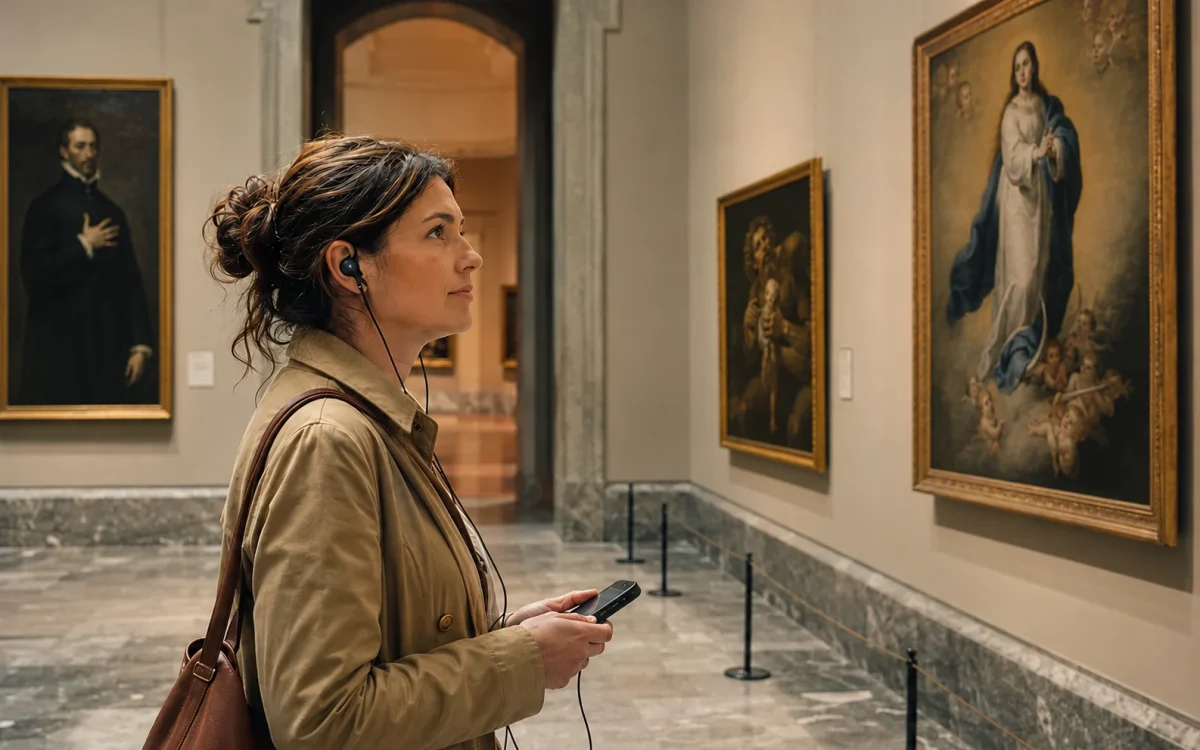
Explore the museum’s essential artworks with a Spanish or English speaking guide, in a small group and with headphones.
What's included
Expert tour guide.
Prado Museum admission tickets.
Not included
Some temporary exhibitions.
Thyssen Museum audioguide.
Experience details
Duration
1h and 30 min
Languages
Spanish, English
Accessibility
The visit is accessible for wheelchair users via a specific route.
Cancellation
Cancellations made up to 48 hours before the start of the activity will incur a charge of €20 per person.
If you cancel less than 48 hours in advance, arrive late or fail to show up, you will not be entitled to a refund.

 Best seller


